This post was originally published in 2011 but with some recent edits, I’ve updated the post.
Affiliate Link Disclosure
This page contains affiliate links to products or services I recommend. If you purchase through one of these links, I make a small commission at no additional cost to you. It helps support the content I create here. As an Amazon Associate, I earn from qualifying purchases.
Canning tomatoes? The very thought of canning anything causes me a little (ok more than a little) discomfort. Why you ask? I worry about eating something contaminated. What if I make a mistake and the food goes bad? Would I be able to tell?
To be honest, I’ve never canned anything… until now. My friend Valerie Tschaar offered to show me how easy it is to can tomatoes from the garden… using a pressure cooker. Now that sounds like a safe and sterile method to me.
While tomatoes are a high-acid food and can be preserved using other methods, we’ve decided to use the pressure cooker. Some recipes for jams, jellies, pickles, etc. should be canned using the boiling water method.
Sit back, relax, and see how easy it is to do.
What You Will Need
- Fresh Ripe Tomatoes
- Canning & Pickling Salt
- Bottled Lemon Juice
- White Vinegar
- Quart size wide mouth canning jars
- Lid (must be new) and band (can be reused)
- Pressure Cooker/Canner
I had several varieties of tomatoes in my garden and selected an assortment. We estimate it takes about a standard-size colander filled with tomatoes to make enough processed tomatoes to fill two-quart jars.
Getting started
Gently place the raw tomatoes into boiling water and let them cook for about a minute. Do not use aluminum pots or bowls. We used stainless steel. (The pressure cooker is aluminum, which is okay because it never comes in contact with any food - only the sealed jars are placed inside the cooker).
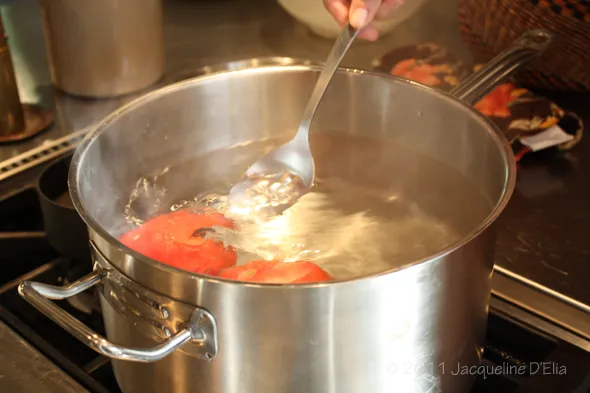
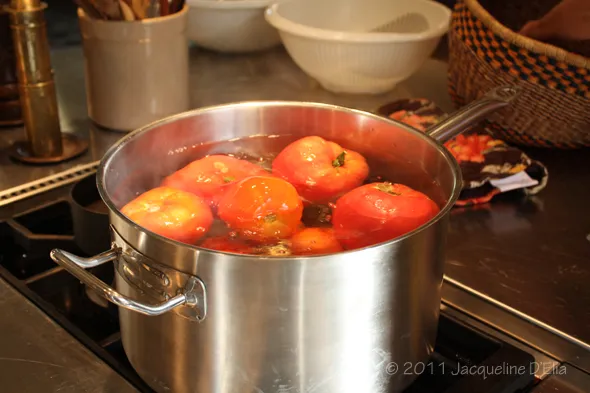
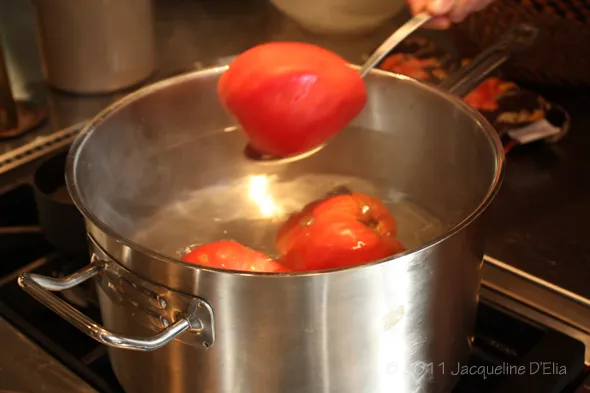
Remove from water and let them cool to touch.
Remove them and let them cool down enough to handle, then grab a paring knife and a cutting board.
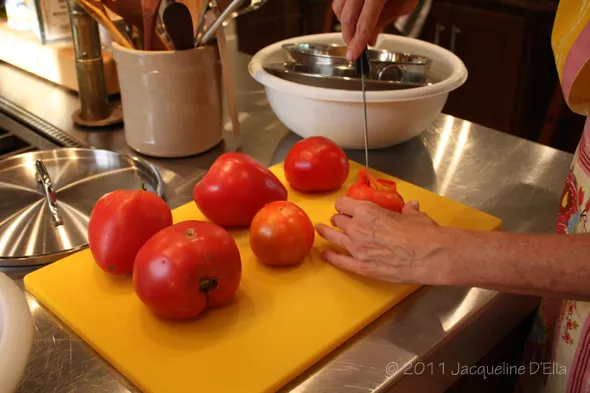
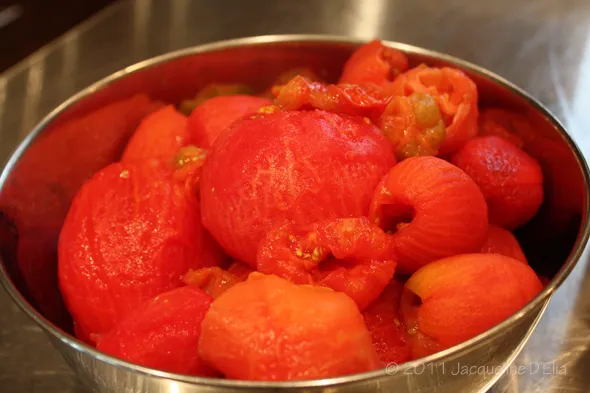
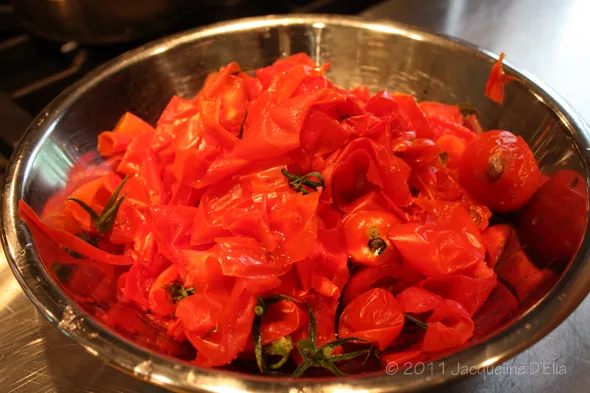
For this canning project, we used wide-mouth quart-size canning jars from Ball. We ran the jars through the dishwasher just prior to using them.
Whole, Chopped, Diced, Pureed - Your Choice
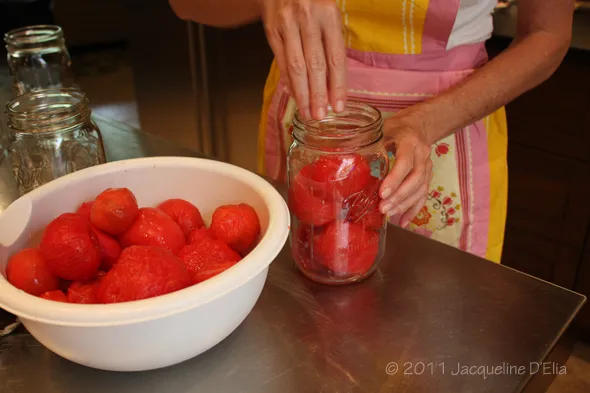
We canned the tomatoes uncooked and whole, packing them tight to remove air spaces. You could also dice, chop, or puree them. Making tomato sauce is another option, provided you cook it down and let it thicken a bit. If you don’t you’ll end up with the bottom portion of your jar filled with liquid. It is your choice whether to add herbs, spices, and flavorings before canning or pack them plain. Valerie had a good point saying she preferred to add fresh herbs and seasonings when she opens and uses the jars.
Filling the Jars
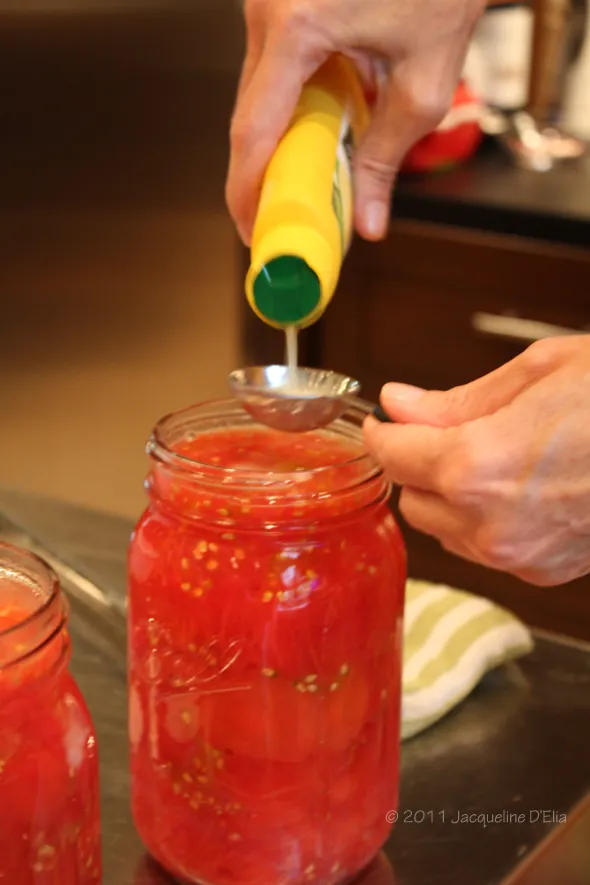
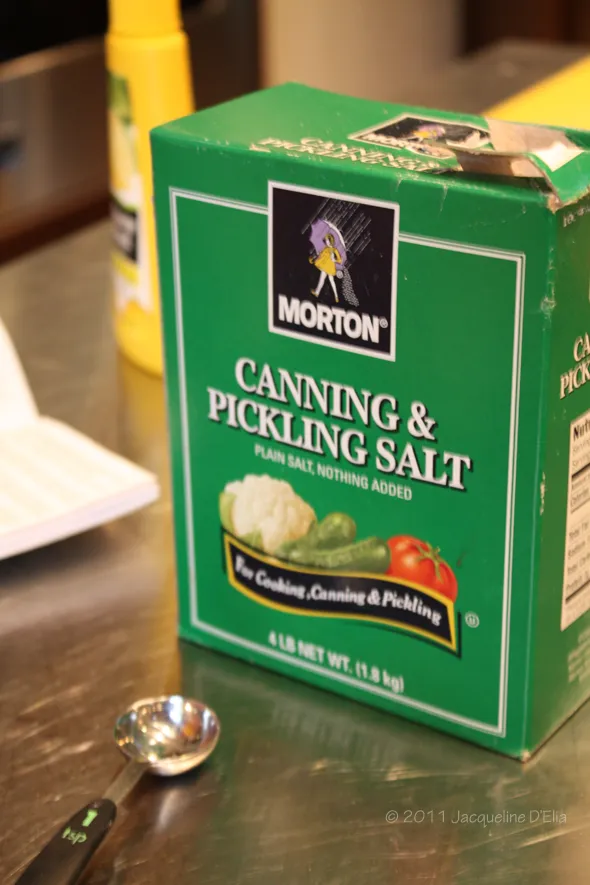
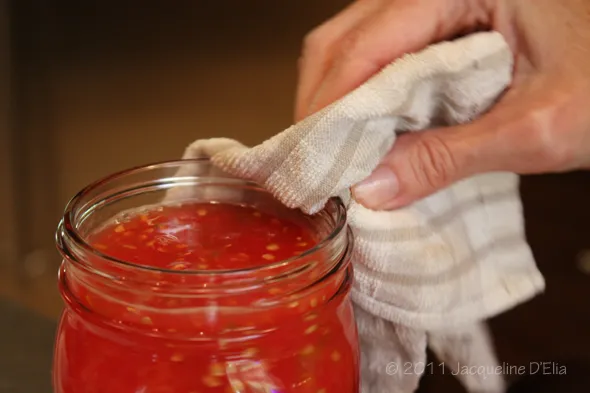
Add two tablespoons of lemon juice and one teaspoon of canning salt.
Fill the jars with the tomatoes, pressing down to fill any air pockets. Use a knife to work out any bubbles. Add two tablespoons of bottled lemon juice and one teaspoon of salt. Clean the opening of the jar. Place the lid on the jar and screw on a band.
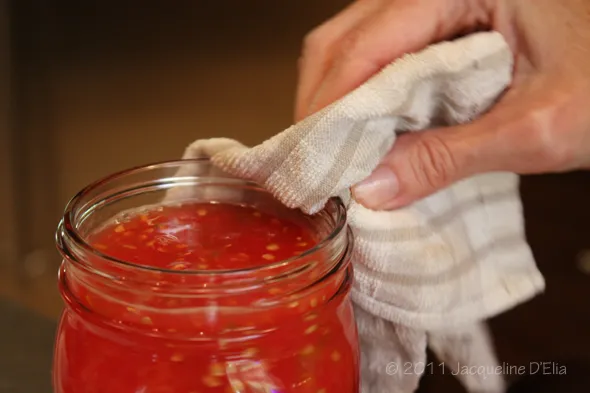
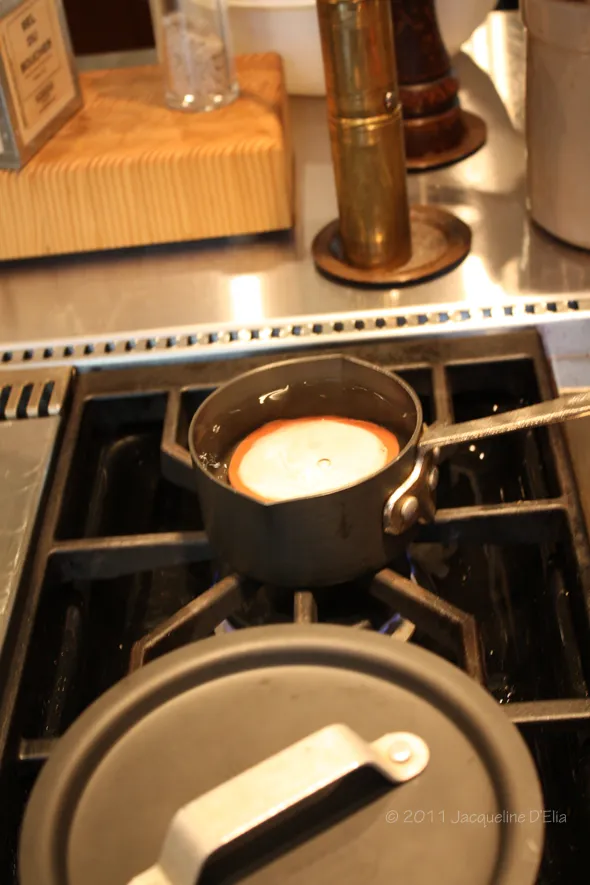
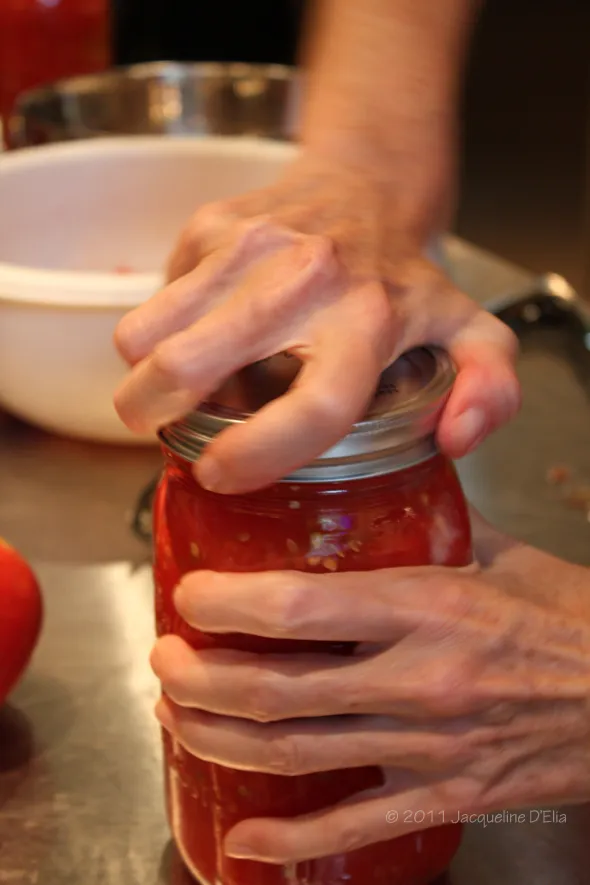
Sterilize lids in hot (not boiling) water. Place lids on top and screw on bands.
Placing jars in a pressure cooker
This pot is a 16 qt Presto cooker which is available on Amazon (Presto 1755 16-Quart Aluminum Pressure Cooker/Canner). It holds 7-quart jars. Fill it with 3 quarts of water and add 2 tablespoons of white vinegar. The vinegar prevents water stains on the outside of jars. We came up with a solution to keep the jars in place when you are canning less than seven jars. Simply use empty jars filled with water as placeholders. This keeps the jars from bouncing around in the cooker.
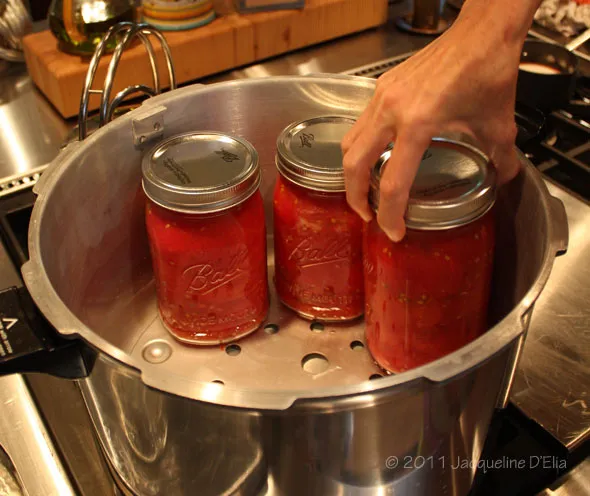
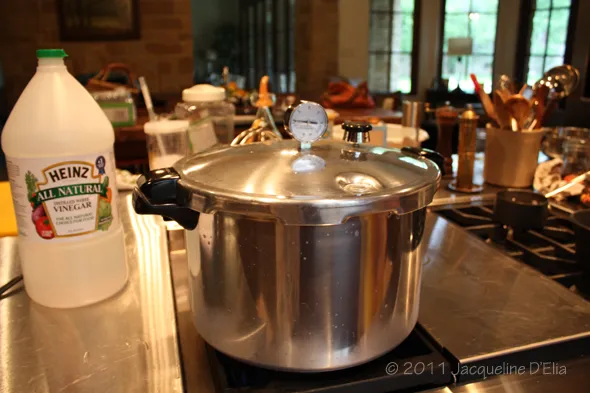
Cool downtime is very important
When finished cooking, turn off the heat and let the cooker cool down. Follow the instructions for your cooker to determine when it is safe to open (once cooled down and pressure has been released). Remove jars carefully and place them on a heat-safe counter to finish cooling.
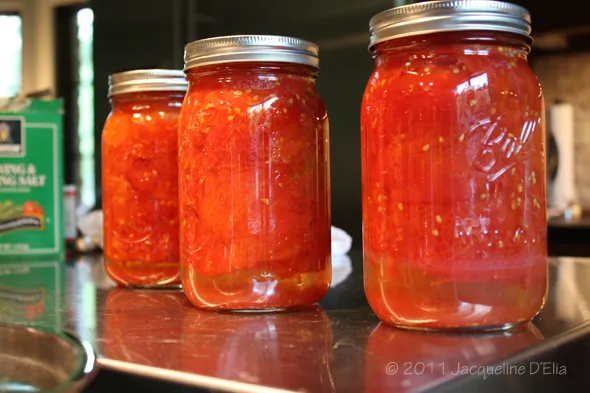
Wait for the POP!
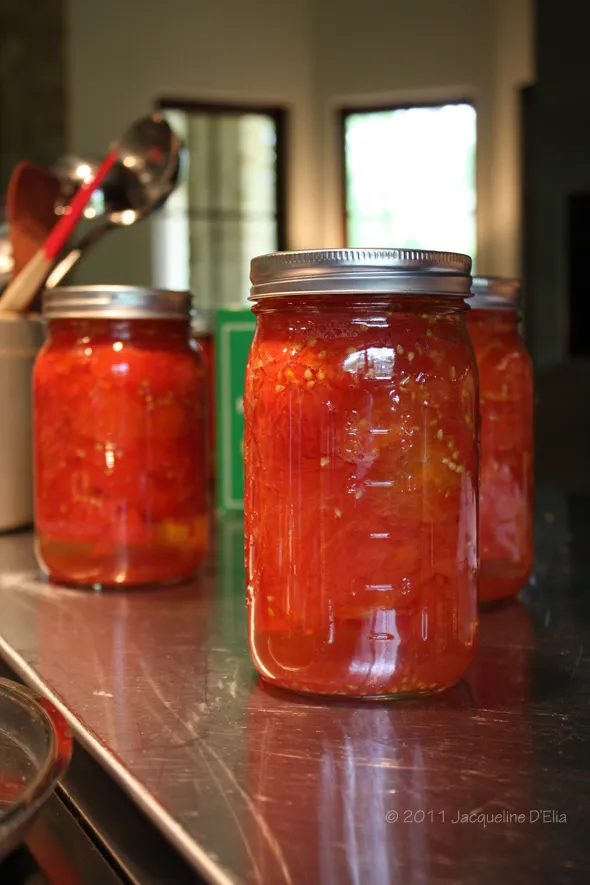
You’ll hear the jars make a POP sound as they cool which means they are sealed. You can tell by looking at the lid which will appear concaved (slopes downward in the center). You know this is the part I am watching very carefully.
A little liquid at the bottom of the jar is okay. We did a second batch a few days later and this time we pureed the tomatoes and cooked them for about 45 minutes. That eliminated most of the liquid at the bottom.
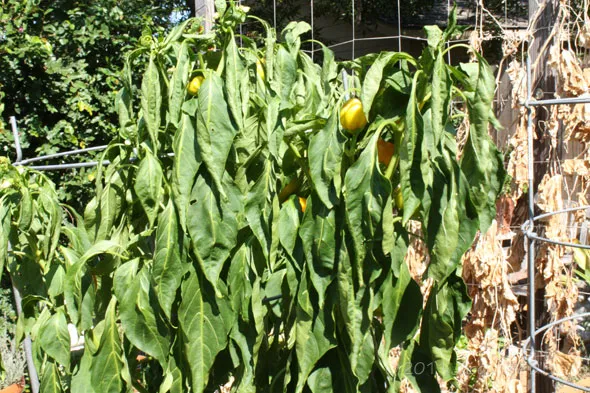
This was a fun project and was easier than I thought it would be. It is hard to grow tomatoes here during July and August in Houston. My plants look exhausted and spent already, especially with the drought and heat we are experiencing. Canning is a way to enjoy the harvest for the rest of the year, long after the plants have finished producing.
For complete instructions and more helpful tips, visit Ball’s site Fresh Preserving.