
The Green anole lizard (Anolis carolinensis) is very common in the Gulf Coast area and it’s continued presence in the garden is a sign you are NOT using harmful pesticides. What a wonderful balanced world your garden becomes once you free it from poisons. Anoles are also referred to as chameleons because they can change color from green to brown and vice versa. A hormone called intermedin secreted by their pituitary gland causes this change and it can be triggered by temperature, background color or even their mood. Green anoles tend to remain green when temperatures are above 70 degrees F., and brown when temperatures are cooler.
I came across this one while taking some photos in the garden. When I first saw him it was a brownish green color. He was moving across some one gallon pots behind the garage. He climbed this olive tree along the bamboo stake. I noticed that once he was surrounded by the green leaves, he began to change color.
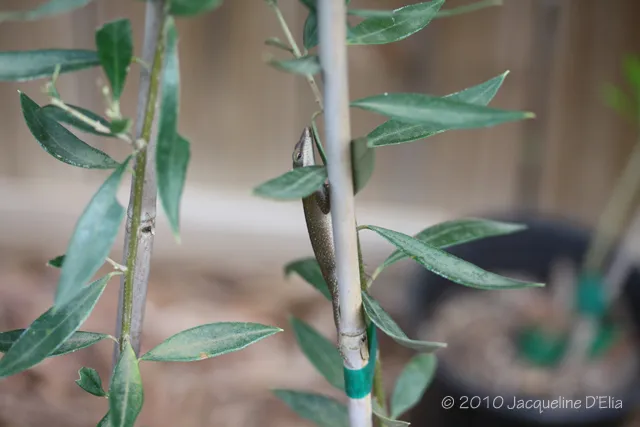
There were subtle changes at first.
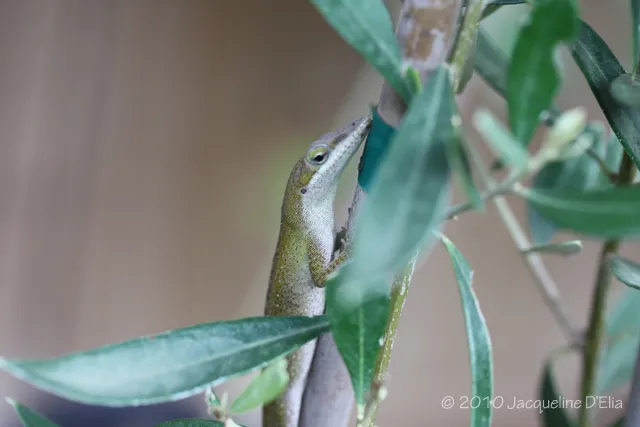
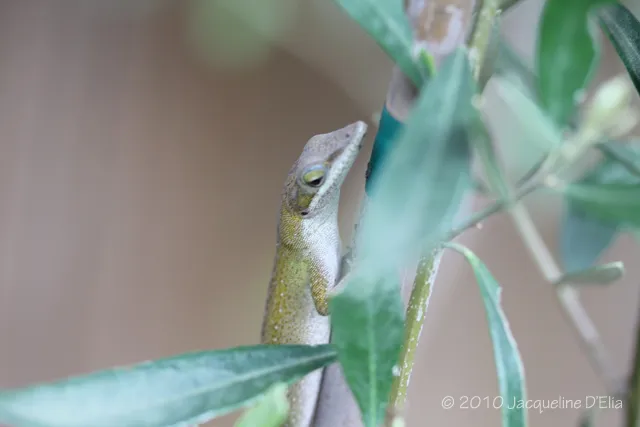
Over the next two minutes this little guy slowly turned green.
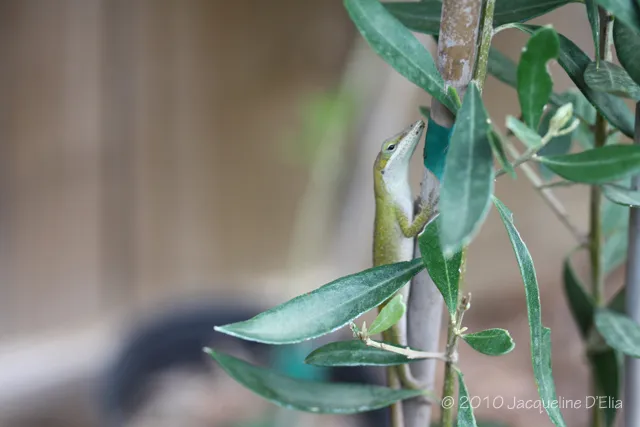
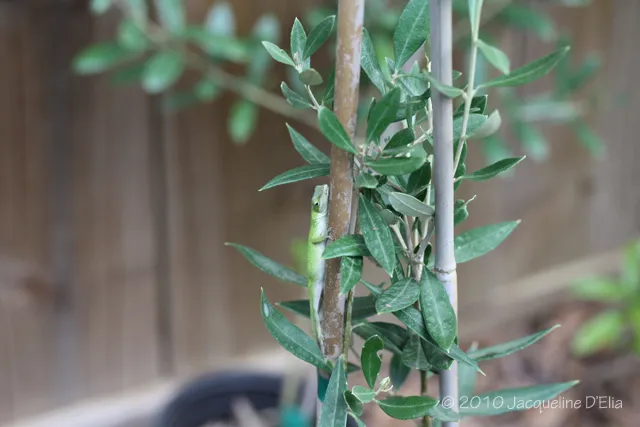
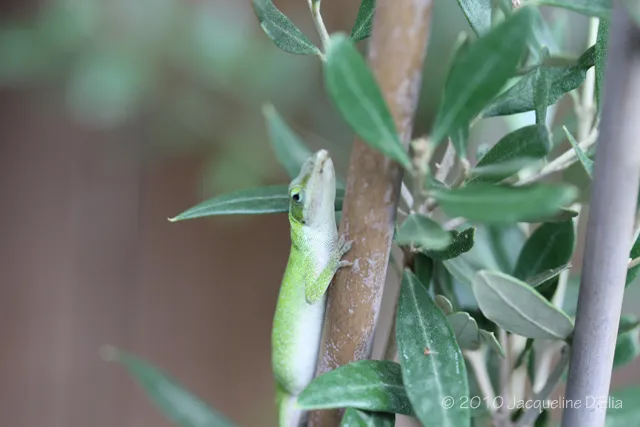
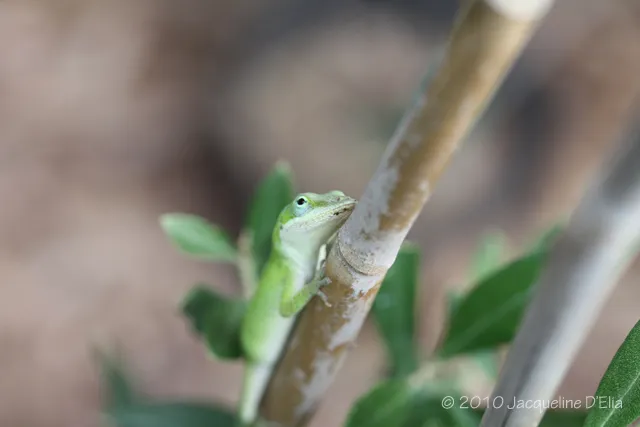
And then, he started turning brown again. I guess the longer he clung to the brown bamboo stake the more he tried to mimic its coloring. It was very interesting to watch.
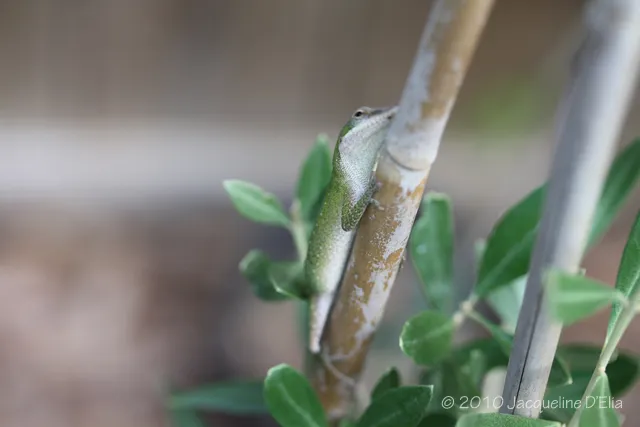
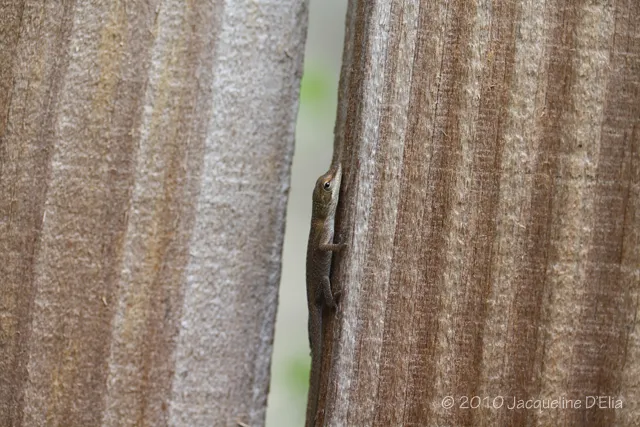
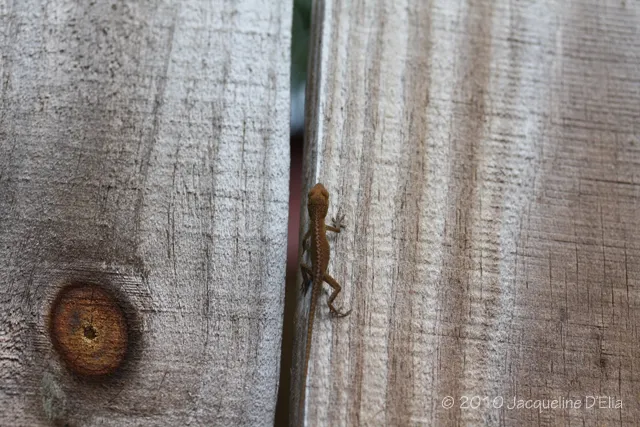
But most important is their presence in the garden. I often find these Anole lizards climbing on the cucumber trellis and it is nice to know they are on the job eating as many insects as they can. Did you know they swallow their prey whole? No chewing. They are good climbers and are active during the day. Many times you’ll find them basking in the sun to warm their bodies. They are reptiles which means they’re cold blooded. Here is a smaller one I spotted nearby climbing the fence. This one was brown and most likely that way because of the background color it was resting on.
You can read more about these fascinating Green Anole lizards here.